


What is Fabric Conveyor Belt
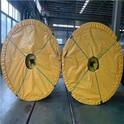
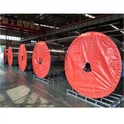
Fabric conveyor belts, or textile conveyor belts as they are also called, are used principally for heavy-duty, abrasive materials. They are a more cost-effective option for shorter conveying distances and lower capacities than steel cord belts. Fabric conveyor belts are used to transport heavy abrasive materials such as rock, ore or gravel. The covers of these fabric conveyor belts are made of rubber that is extremely resistant to wear, abrasion and cutting. Fabric conveyor belts are anti-static. Low elongation is a matter of course for us as it expresses our high demands on quality. Fabric conveyor belts are manufactured in strengths of up to 3,150N/mm and widths of up to 3,000 mm.
Advantages of Fabric Conveyor Belt
Cost-Effectiveness
One of the primary advantages of fabric conveyor belt is their cost-effectiveness, especially for shorter distances and lower capacities. When the transportation needs do not involve extremely long distances or excessively heavy loads, fabric conveyor belts provide an efficient and economical solution.
High Tensile Strength-to-Weight Ratio and Flexibility
Fabric conveyor belts a high tensile strength-to-weight ratio, crucial for their flexibility and performance, offering strong yet lightweight efficiency in conveyor systems. The flexibility of fabric conveyor belts allows for easier handling, installation, and adaptation to different conveyor configurations and pathways. This flexibility also contributes to the belt's ability to form troughs easily, enhancing its capacity to carry materials securely.
Superior Troughing Properties and Resistance to Impact and Chemicals
The troughing properties of fabric conveyor belts are superior due to their flexible yet strong structure. This ability to form a trough shape effectively contains and transports a variety of materials, minimizing spillage and increasing the efficiency of material transfer.





Why Choose Us
Our Product
The company's main products are steel cord conveyor belt, heat resistant conveyor belt, PVC/PVG mining conveyor belt, pattern conveyor belt, oil resistant conveyor belt, Guard side conveyor belt and fabric core conveyor belt.
Product Application
The products can be widely used in coal, mining, metallurgy, port, electric power, food, construction and transportation industries.
Production Equipment
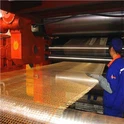
The company has advanced production equipment, wire rope conveyor belt flat vulcanizing machine, fabric core flat vulcanizing machine (including coiling device), semi-automatic building machine, automatic expansion force building machine, pin type cold feeding rubber extruder, four-roller calender, open mill, mixer, 16-station automatic small material weighing machine, etc.
Our Certificate
The company has passed GB/T19001 standard quality management system certification, GB/T24001 standard environmental management system certification, GB/T28001 standard occupational health and safety management system certification.
Structure of Fabric Conveyor Belt
Fabric reinforcement
Fabric conveyor belts are reinforced by 2-5 rot-resistant plies made of synthetic EP or PP fabric. These fabrics possess a good tensile strength/weight ratio, have excellent flexibility and troughability, low elongation, high impact resistance and good chemical resistance.
Covers
The carcass of the fabric belts is protected by covers. Cover qualities or grades are characterized by the conveyor belts' chemical and physical properties. Inclined systems require cleats or fabric conveyor belts with grooved surfaces. Cover thickness depends on the properties of the transported material and on loading conditions.
Skim layers
Rubber skim layers in the fabric conveyor belt's carcass provide excellent adhesion between the plies and efficient distribution of tension. They also absorb impact stress caused by dropping material.
Fabric reinforcement
Fabric conveyor belts are reinforced by 2-5 rot-resistant plies made of synthetic EP or PP fabric. These fabrics possess a good tensile strength/weight ratio, have excellent flexibility and troughability, low elongation, high impact resistance and good chemical resistance.
Covers
The carcass of the fabric belts is protected by covers. Cover qualities or grades are characterized by the conveyor belts' chemical and physical properties. Inclined systems require cleats or fabric conveyor belts with grooved surfaces. Cover thickness depends on the properties of the transported material and on loading conditions.
Skim layers
Rubber skim layers in the fabric conveyor belt's carcass provide excellent adhesion between the plies and efficient distribution of tension. They also absorb impact stress caused by dropping material.
The frame
The system's framework holds all of the moving parts together for safe and secure operation.
The belt
A long stretch of thick, durable material upon which materials are transported from one place to another.
The conveyor belt support
Rollers assist the belt to stay on course and swiftly maintain movement. Rollers keep objects in place and prevent the belt from sagging.
The driving unit
Motors may use either variable or constant speed-reduction gears to power the conveyor belt. An efficient driving unit must continually assist the belt with continuous running, smooth reversing and repeatedly adjusting direction.
The pulleys
The conveyor belt should loop over two or more strategically positioned pulleys. The pulley controls the belt's movement and performs critical functions such as driving, redirecting, turning, tensioning and tracking the belt.
The clamping straps
Clamping straps are used on various machines to hold down fixtures and work components.
Add-on modules
Most additional parts are installed for further reinforcement. While rollers support the belt from within the system, stands and lateral guides support the outer framework.
Fabric Largely Determines Properties of Conveyor Belt
Properties of a conveyor belt are largely determined by its fabric layers. In addition to the yarn and weave pattern used, the number of fabric layers also determines properties such as the belt's strength and stretch. Adding more layers of fabric to a belt makes it stronger, but the number of layers also affects the flexibility of the belt. The more layers of fabric, the stiffer the belt, both in width- and length-wised. The flexibility of a belt determines the diameter of the idler. When the diameter of the idler is smaller, the belt must be more flexible to be able to wrap around the idler effectively.
The underside of the conveyor belt has different finishes. For example, it can be supplied as bare or impregnated fabric, which gives the lowest friction on a bearing surface. Low friction makes the installation quieter and is less stressful for the belt drive. The impregnation prevents the fabric from becoming contaminated with moisture or sand, which can prevent shrinkage, for example. The underside can also be coated with a layer of plastic with or without a profile. This coating is usually carried out in a diamond structure. The structure can offer a grip effect, or actually prevent soiling and slightly reduce friction on the bearing surface. This is often used in wet conditions.
After finishing, in many cases the fabric is given a plastic coating on the top, made of thermoplastic material, such as PVC, PU, PE, Hytrel® or silicone coating. These coatings are available in different colours, with different chemical compositions and degrees of hardness.
Various profiles, for example a diamond, studs, or a herringbone, with specific properties can then be applied to the coatings. For example, a fine diamond offers better unloading properties for sticky dough and studs are particularly suitable for inclined transport because they offer a good grip on soft products. Click here for an overview of the advantages of the various profiles.
In applications where hygiene during the production process is of great importance, moisture and microbes must be prevented from getting into the fabric inside the belt. By sealing the side of the conveyor belt, the fabric inside the belt is completely closed off. This ensures a longer service life of the conveyor belt and contributes to a better, consistent quality and hygiene of your product. A thermoplastic material such as PVC, PU or PE is applied to the side of the conveyor belt for this, using a special technique that seals the tissue layers.
How Fabric Conveyor Belt Reduce Time Usage
Automate the repetitive tasks
Firstly, they automate repetitive tasks, minimizing the need for manual labour. This automation ensures consistent and efficient movement of materials, eliminating the time spent on manual loading, unloading, and transportation.
01
Helps in continuous flow production
Secondly, conveyor belts facilitate continuous flow production that makes seamless transitions between different stages of manufacturing or processing. This easier flow minimizes the idle time between tasks, maximizing productivity.
02
Makes the work faster and efficiently
Moreover, fabric conveyor belt design for high-speed operation, allowing materials to be transported quickly from one point to another. This helps to boost the overall production cycle, reducing lead times and improving throughput.
03
Space optimisation
Additionally, fabric conveyor belt with space utilization by transporting materials vertically, horizontally, or at inclines, efficiently utilizing available floor space in factories or warehouses.
04
Improved with advanced technologies
Furthermore, conveyor systems can be integrated with advanced technologies such as sensors, robotics, and automation software, further enhancing efficiency and reducing downtime through predictive maintenance and real-time monitoring.
05
How to Choose the Fabric Core of the Conveyor Belts
Polyester(E) is a kind of synthetic chemical fibers such as terylene, trevira, and teoron. Polyester fabric are unaffected by moisture and micro-organisms. They are very flexible, have low elongation and acid-resistant.
Polyamid(P) is also a kind of synthetic chemical fibres such as nylon, perlon, have more or less the same properties as ployester although not as low elongation.
Ployester-polyamid(EP)the EP fabric has polyester in the warp and polyamide in the weft. This combination provides optimal benefits in the textile.such as low elongation, high impact-resistant, high strength, very flexible.
How to Choose Fabric Conveyor Belt


Type of material
The first step when choosing the right conveyor belt is to consider the material that will be transported. The size, weight, and shape of the material as well as the location where the operation is located should be carefully considered to determine which type of conveyor belt is most suitable.
In this way, for best results it is advisable that the conveyor belt be able to handle all stages and possible reactions and changes of the material to be transported.
In addition, it is important to check whether the conveyor belt can withstand the weight or impact of the type of material transported to ensure that there are no problems that stop operations.
Speed
It is extremely important to take into consideration the conveyor belt's operating speed. This information is crucial to ensure that the conveyor belt selected will be able to transport the material at a safe speed for the operators.
As well as effectively achieve the desired objectives. Selecting an inadequate conveyor belt could lead to serious consequences such as operational failures, accidents, material damage, and even financial losses.
Temperature of the material
The third step when choosing the right conveyor belt is to know what is the working temperature and peak temperature of the material transported.
After all, there are belts exclusively designed for transporting materials at very high temperatures, incandescent in some cases, with flame and high heat resistance properties.
Drive mechanism
Within the conveyor belt system there are different types of drive mechanisms available such as electric motors, combustion engines, hydraulic motors, steam engines, and direct current motors, each with a different power.
So in this case there is a need for synergy between the weight of the belt while transporting the material and the capacity of the motors installed.
So it is necessary to keep in mind factors such as the load transported, the angle of the belt's inclination, operating speed, and the operation's travel distance.
Distance
The fifth step when choosing the right conveyor belt is to determine the belt's distance. This distance should be enough to enable the material to be transported effectively and safely, regardless of its location.
In addition, it is important to keep in mind that the belt's length should be suitable for transporting the material to the desired total distance.
This ensures the transport of the material quickly, efficiently, and safely, regardless of the belt's total distance.
Finally, it is essential to make sure that the belt has the necessary length to ensure that the material is transported effectively and safely over the belt's total distance.
Operating conditions
To choose the right conveyor belt, it is necessary to consider the operating conditions to which it will be subject. This includes climate and working environment conditions such as humidity and pressure.
It is important to understand if these operating conditions will be constant or if they will change over time. If there are large variations, it is necessary to choose a conveyor belt that adapts to these changes and will continue to deliver quality performance.
Application of Fabric Conveyor Belt
Production and manufacturing: In manufacturing facilities, conveyor belts are used to move raw materials, semi-finished and finished products between different production steps. This improves efficiency and reduces manual labour.
Recycling: At recycling facilities, conveyors are used to sort and move various materials such as paper, cardboard, glass and plastic for recycling purposes.
Agriculture: In the agricultural sector, conveyor belts are used to harvest and transport crops such as grain and vegetables, as well as to move animal feed.
Mining and heavy equipment: Conveyor belts play a crucial role in mining and mineral processing. They are used to move ore, coal and other raw materials from the mine to processing facilities.
Food processing: In the food processing industry, conveyors are used to move food products during different stages of processing, such as washing, cutting, packaging and labelling.
Logistics and distribution: Conveyor belts are often used in warehouses, distribution centres and airports to move goods from one location to another. They help streamline the order picking process and load and unload trucks and containers.
Airports: Conveyors are extensively used at airports for transporting baggage between check-in counters, baggage handling systems and baggage belts.
How to Maintain Fabric Conveyor Belt
Keep your belt, rollers and pulleys clean
A belt that has a dirty underside may slip which reduces the conveyor's weight moving capacity. Most belt conveyors have either a slider bed or rollers that the belt moves over. A build up of dirt on these parts can reduce both your belt and your motor's life.
Check your bearings
Loose bearings and dry parts are going to lead to a break down sooner or later. Sealed bearings don't need as much lubrication but other bearings in your conveyor belt system may need it a lot more. Certain lubricants can damage your belt materials however. If your bearings don't self align then check to make sure that the crooked bearing isn't binding the pulley which can cause an early failure of your bearings and put unnecessary strain on your motor.
Check your pulley alignment and wear
The tension of the belt should be the same on both ends if your pulley has been properly aligned with the rollers but if it is unaligned then the belt will be stretched unevenly. Place your material in the centre to optimize your belt life.
Inspect for belt slippage
Belt slippage is caused by improper tension of the belt or loading your conveyor belt with a heavy load. If your pulleys are worn smooth then the chances of your belt slipping are high. Pulleys that have still got their grips tend to handle loose belts easier but also tend to abrade the bottom of the belt if it is too loose.
Keep your motor clean
A lot of conveyor motors have cooling fans and vents that blow cool air on the motor which keep it cool but if these become blocked due to dust or grease then your motor can overheat and fail. So keep on regularly cleaning and maintaining your fans and vents to avoid this.
Set your conveyor to pull rather than push
Your belt's conveyor motor and drive pulley can be set to push or pull the loaded belt. Pulling is usually a lot easier than pushing as your conveyor loses about 50-70% of its load capacity when pushing instead of pulling a load. Only set your conveyor to push a load when it is absolutely necessary.
