


What is Rubber Conveyor Belt
The rubber conveyor belt has many types, such as heating resistant belt, abrasion-proof rubber conveyor belt, fire resistant rubber conveyor belt, oil resistant rubber conveyor belt, alkali resistant rubber conveyor belt, alkali resistant rubber conveyor belt, cold resistant rubber conveyor belt, and other characteristics. They are mainly used in mining, metallurgy, iron and steel, coal, hydropower, building materials, chemical, food, and other enterprises of solid material transportation.
Advantages of Rubber Conveyor Belt
Increased Efficiency
Conveyor belts automate the transportation process, reducing manual labor and increasing overall productivity.
Versatility
Rubber conveyor belts can handle a wide range of materials and are adaptable to various environments and applications.
Durability
Rubber conveyor belts are designed to withstand heavy loads, harsh environments, and regular wear and tear.
Safety
Conveyor belts ensure the safe movement of materials, reducing the risk of accidents and injuries in the workplace.






Why Choose Us
Our Product
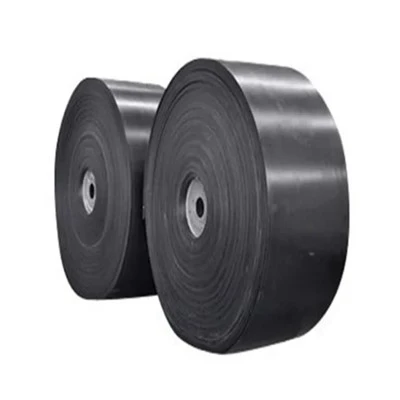
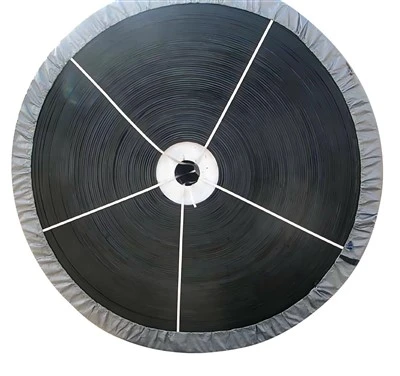
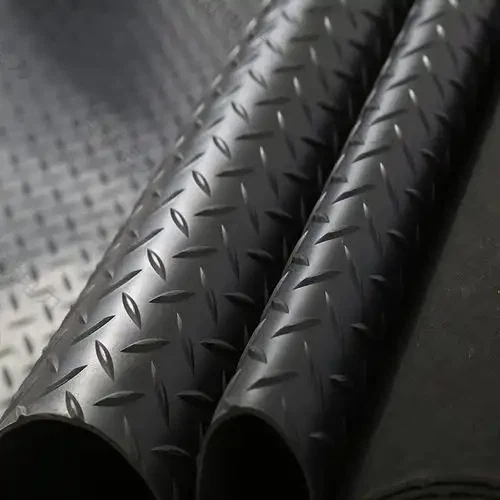
The company's main products are steel cord conveyor belt, heat resistant conveyor belt, PVC/PVG mining conveyor belt, pattern conveyor belt, oil resistant conveyor belt, Guard side conveyor belt and fabric core conveyor belt.
Product Application
The products can be widely used in coal, mining, metallurgy, port, electric power, food, construction and transportation industries.
Production Equipment
The company has advanced production equipment, wire rope conveyor belt flat vulcanizing machine, fabric core flat vulcanizing machine (including coiling device), semi-automatic building machine, automatic expansion force building machine, pin type cold feeding rubber extruder, four-roller calender, open mill, mixer, 16-station automatic small material weighing machine, etc.
Our Certificate
The company has passed GB/T19001 standard quality management system certification, GB/T24001 standard environmental management system certification, GB/T28001 standard occupational health and safety management system certification.
Types of Rubber Conveyor Belt
General Purpose Conveyor Belts
General purpose conveyor belts are widely used and suitable for conveying a wide range of materials. They are commonly found in industries such as agriculture, mining, and manufacturing. These belts offer excellent versatility, moderate temperature resistance, and good abrasion resistance.
Heat-Resistant Conveyor Belts
Heat-resistant conveyor belts are designed to withstand high temperatures, making them suitable for applications involving hot materials or environments. Industries such as steel, cement, and glass rely on heat-resistant conveyor belts to transport materials without deformation or damage.
Oil-Resistant Conveyor Belts
Oil-resistant conveyor belts are specifically designed to resist the damaging effects of oil and grease. They find applications in industries where oily substances are present, such as recycling plants, automotive manufacturing, and food processing.
Flame-Resistant Conveyor Belts
Flame-resistant conveyor belts are crucial in industries where there is a risk of fire or combustion. These belts are made from fire-resistant materials, reducing the risk of spreading flames in case of accidents. They are commonly used in coal mines, power plants, and chemical industries.
Food-Grade Conveyor Belts
Food-grade conveyor belts are manufactured with materials that meet strict hygiene and safety standards. These belts are commonly used in the food and beverage industry, ensuring the contamination-free movement of products such as fruits, vegetables, and packaged goods.
Rubber Conveyor Belt Grade
Grade A - Abrasion Resistant
Abrasion-resistant rubber, also known as Grade A, is used when the conveyed material is very rough and abrasive, and causes the rubber to wear from the belt too quickly. The conveyor’s specific cleaning system, such as brushes, scrapers and/or conveyor skirting, can also contribute to conveyor belt wear.
Grade A rubber is used when the wear of the conveyor belt would occur too quickly when using general purpose grades. Even though Grade A rubber is more costly than general purpose grades, the cost of removing and installing replacement belts frequently can be excessive. Therefore, it may be more cost effective to go with a higher-wear rubber.
An example of when you would use Grade A rubber belt would be on an iron ore conveyor. Iron ore is a very abrasive material and would wear away standard rubber quickly. Grade A rubber would give the conveyor belt a greater life and more up time on the conveyor.
Grade E–Static Electricity Conducting
As the name suggests, static electricity conducting rubber conveyor belting conducts static electricity produced during the transport and conveying process, and discharges the electric charge – usually into a grounding path.
Minimising sparks from static electricity is a necessity when in the presence of potentially explosive materials such gases, liquids, powder and dust because the risk of explosion can be deadly.
A common use of Grade E rubber belting is at a aluminium refinery. Aluminium can commonly discharge excess electrons which can cause a static electricity build up. Static electricity conducting belts are used to absorb the excess electrons and discharge them safely.
Grade F – Fire Resistant
Fire-resistant belting is usually used when transporting heated materials. Rubber has natural properties which can be ignited and burn.
Grade F rubber belting has added properties which increase the ignition temperature and increases resistance to fire.
An example of the use of Grade F rubber belts are at underground mines, coal mines and power stations. If a rubber conveyor belt were to catch underground, the smoke and air hazards could be potentially fatal, therefore fire-resistant belts are usually used to mitigate the risk.
Work at coal mines and power stations involve heat processes. Fire-resistant belts help to reduce the risk of the heated process causing the conveyor belt to ignite.
Grade M & N – General Purpose
General-purpose rubber is the most common type of rubber conveyor belt and is used when special properties are not needed to suit an application.
Grade N rubber is lower quality compared to Grade M. Grade M rubber has greater hardness, is more abrasion-resistant and is superior in strength when compared to Grade N. Therefore the only difference between Grade M and Grade N rubber is the quality of the rubber.
Grade S – Static Electricity Conducting and Fire Resistant
This is a combination of both Grade E and Grade F rubber. Grade S rubber conveyor belts are both static electricity conducting and fire-resistant. The reason this combination exists is because combination is the commonly used.
Grade Z–Special Properties
Grade Z rubber belting is a specially designed conveyor belt to suit a particular purpose. This grade is used when the rubber properties do not fit in any of the other categories.
Rubber Conveyor Belt Joint Method
All the conveyor belts must be annular for use, so the quality of the conveyor belt joint directly affects the conveyor belt's service life and the conveyor line's smooth operation. The standard methods of general conveyor belt joints are mechanical joints, cold bonding joints, hot sulfur joints, etc.
Generally, it refers to the use of belt buckle joints. This joint method is convenient and economical, but the efficiency of the joint is low and easy to damage, which has a particular impact on the service life of the conveyor belt products. In the PVC and PVG, products are below grade 8. Connecting with a buckle corresponds to 28% -45% of the conveyor belt's strength.
That is, you can use cold adhesive to make the joint. This joint method is higher than the mechanical joint, more economical, and should have a better combined effect. Still, from practice, because the process conditions are more challenging to master, the adhesive's quality significantly impacts the joint; it is enormous and unstable. A cold adhesive bond is equivalent to 40% -55% of the strength of the conveyor belt itself.
The practice has proved to be the ideal joint method. It can ensure high joint efficiency but is also very stable. The joint life is long and easy to master. However, there are disadvantages, such as process trouble, high cost, long joint time, etc. Binding with mechanical thermal sulfide is equivalent to 60% -80% of the strength of the conveyor belt itself.
Key Specifications of Rubber Conveyor Belt
Material Types and Composition
The material types used in rubber conveyor belts vary widely and are chosen based on the demands of the application. Natural rubber, styrene-butadiene rubber, and nitrile rubber are common materials, each offering different levels of flexibility, wear resistance, and oil resistance. The choice of rubber grade directly impacts the belt’s performance, especially in harsh or specialized environments such as those involving oils, chemicals, or extreme temperatures.
01
Structural Features
The structural integrity of a conveyor belt depends on its design and construction. Key features include the carcass, which is typically made of fabrics like polyester, nylon, or cotton, and the cover, which is composed of the rubber grade specifically chosen for its protective properties. The thickness of the rubber cover, often tailored to the conveyor belt rubber grade, provides resistance against abrasion, impacts, and cuts, extending the belt’s operational life.
02
Tensile Strength and Durability
Tensile strength is a critical specification for rubber conveyor belts, indicating the maximum load the belt can handle without breaking. Higher tensile strength is essential for heavy-duty applications, and the selected rubber grade often determines this property. Durability also encompasses the belt’s ability to resist wear and tear over time, a factor heavily influenced by the rubber composition and quality.
03
Environmental Resistance
Environmental resistance is another key specification driven by the conveyor belt rubber grade. This includes the belt’s ability to withstand exposure to various temperatures, chemicals, and UV light. Some rubber grades are specifically engineered to resist fire, static electricity, or oily substances, making them indispensable in specific industrial settings.
04
Factors Influencing the Selection of Rubber Conveyor Belt

Load Size and Material Type
The size and type of the load that the conveyor will carry are primary considerations. Heavy or sharp materials require a higher grade of rubber that can resist cuts, tears, and abrasions. For example, mining operations dealing with sharp rocks will benefit from a Grade 1 rubber, which offers superior durability and abrasion resistance compared to a Grade 2 rubber used in lighter applications like the packaging industry.

Operating Conditions
The operational environment of the conveyor belt significantly impacts the choice of rubber grade. This includes factors such as the speed of the conveyor, the length of travel, and whether the belt is exposed to continuous or intermittent use. High-speed belts under continuous operation require robust rubber grades that can withstand the stress and heat generated from rapid movement over long distances.

Environmental Factors
Environmental conditions such as temperature, exposure to chemicals, moisture, and UV light also play a crucial role in selecting the right conveyor belt rubber grade. Belts operating in extreme temperatures, whether hot or cold, need rubber grades specifically formulated to maintain their integrity and performance under such conditions. Similarly, belts used in chemical plants must be resistant to the specific chemicals they will encounter.
General-purpose belting: This is for general conveying or power transmission.
Agricultural belting: This is for agricultural applications like silage transfer, farm equipment belts, etc.
Retail belts: They used used in checkout counters or inventory transfer for various commercial purposes.
Construction belting: They are used for materials such as roofing shingles or plywood. They are heavy-duty belts designed for use on construction equipment.
Elevator conveyor belts: These kind of belts are typically used in vertical applications where there are additional safety factors for bucket attachments as well as holes for meshing with drive and tracking components.
Food and beverage processing belts: They are designed to be used in food or beverage processing applications.
Forest conveyor belts: These are designed for use in the logging, sawmill, tree farm, and related industries.
Mining and quarrying belts: They are heavy-duty belts used for applications in mines and quarries. They can transport materials such as ore, stone, tailings, gravel, aggregate, etc.
High temperature belting: They are used for materials that can safely tolerate extreme temperatures. They can transfer high temperature materials.
Inclined conveyor belts: They are typically designed for use in conveyance of material up an incline or down an incline.
Manufacturing and fabrication belting: They are used in factory production lines. They include belts designed for specific fabrication applications like semiconductor chip manufacturing.
Belting for packaging operations: These belts are abrasion resistant for use with cardboard, package paper, etc.
Power transmission belting: They are used in power transmission applications like engine belts, belting for power takeoffs, industrial machinery etc.Belting is used in the pulp and paper industry to transfer pulp, paper or paper products.
Custom conveyor belts: They can be designed for special applications.
How Rubber Conveyor Belts Are Made


Mixing–Making the rubber compound
The process starts by the hand selection of the raw materials according to a computerised formula specific to the required specification of rubber. The various ingredients are carefully weighed and measured out along with oils and carbon black, which is one of the most essential polymers used in any black rubber compound. These are added automatically to form the base mixture. The batch of mixed rubber compound is then heated and mixed coarsely. After a calculated time, the mixture is dropped onto a rolling mill and then further kneaded until a soft, pliable consistency is achieved.
The calendering process
The next stage is the calendaring process. It is at this point that the belt begins to take on its durable form as layers of inner fabric (for multi-ply belts) or steel cords in the case of steelcord belts, are mated with the raw unvulcanised material. The rubber is introduced from what is called ‘the nip’ where it is spread as a film onto the rolling mill. The fabric plies (Polyester warp and Polyamide weft (EP) fabrics are the most commonly used) are then fed through the nip, where the rubber is compressed directly onto it.
Some fabrics are calendared with one or two sides of rubber, allowing the additional strengthening layers to be added. The strength of the level of adhesion (bond) between the various layers of plies and between the plies and the covers is extremely important and is measured according to the ISO 252 test method. This literally involves pulling the layers apart and measuring the force required in Newtons per millimetre. If the adhesion levels are too high then this can be very problematic when creating a splice joint to make the belt ‘endless’. On the other hand, if the adhesion is insufficient then the layers of the belt can become separated over time. This phenomenon is known as ‘delamination’.
The layering process can happen several times depending on the number of plies required by the belt specification and the thickness of the outer covers of the belt. Once the specified grade thickness is achieved the calendared belt moves forward onto the stationary vulcanisation presses.
Vulcanization
Vulcanization is the chemical process in which the belt is pulled under tension into a press. The rubber compound is typically heated with sulphur; accelerator and activator at a temperature of between 140–160℃ and pressures up to 20 bar are applied. Pressure is exerted on the surfaces of the press in contact with the outer covers of the belt using hydraulic rams. Both the temperature of the press plates and the level of pressure need to be extremely accurate and uniform throughout the entire area of the press surfaces otherwise imperfections and inconsistencies can occur.
The actual scientific process involves the formation of cross-links between long rubber molecules in order to achieve improved elasticity, resilience, tensile strength, viscosity and hardness. It is therefore a crucial part of the production process. The duration of the vulcanisation process depends on the thickness of the belt and the type of rubber. For example, heat resistant rubber requires a longer vulcanisation time compared to straightforward abrasion resistant rubber. Although highly automated, the vulcanization process stills needs to be closely monitored by experienced personnel.
Final checking
The manufactured belt finally moves onto quality control where every metre is thoroughly inspected before being approved for transportation to the shipping and storage areas. But even at this stage, final quality control procedures are in place because random samples of completed belt are subjected to further arduous testing in the Dunlop laboratory.
