


Rubber Sheet
What is Rubber Sheet
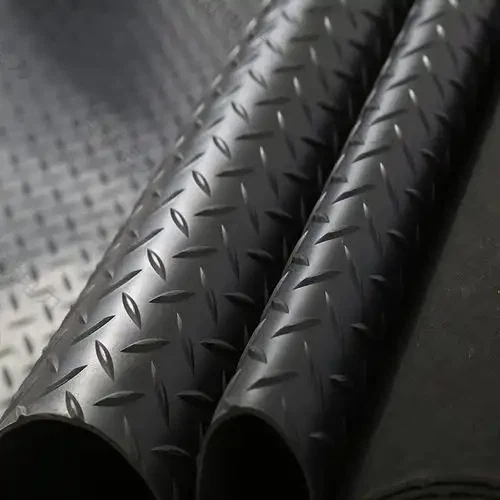
Rubber sheet, also known as rubber matting or rubber flooring, refers to a type of durable sheet material made from rubber. It is commonly used in various environments where a resilient, non-slip, and protective surface is required. Rubber sheeting comes in different thicknesses, textures, and colours, catering to a wide range of needs and preferences. It can be produced using natural rubber or synthetic rubber. Rubber sheets are used for a wide range of applications whether they are residential or industrial. These applications include home floor renovations, as well as construction-zone safety enhancements. Rubber sheet material permeates our everyday lives, and its applications are broad and typically tied to the industrial world.
Advantages of Rubber Sheet
Excellent Durability and Longevity
Rubber sheets are well-known for their outstanding durability and extended lifespan, making them perfect for industrial settings where resilience is crucial. Their capability to endure tough conditions, abrasion, and wear provides extended protection for both equipment and surfaces, thereby reducing the necessity for frequent replacements.
Superior Impact Resistance
Industrial operations often involve heavy machinery and equipment, increasing the risk of impact damage to surfaces and components. Rubber sheets act as a protective barrier, absorbing impacts and reducing the risk of costly damage to machinery, floors, and other surfaces, thereby prolonging their lifespan.
Enhanced Slip Resistance
In industrial settings, where slip and fall incidents can have devastating repercussions, safety is of utmost importance. Rubber sheets have a textured surface that offers superior traction and grip, reducing the risk of slips and falls, particularly in locations where there may be spills of oil or wetness.
Effective Noise and Vibration Reduction
Industrial machinery and equipment can generate significant noise and vibrations, leading to discomfort and potential health hazards for workers. Rubber sheets act as sound dampeners and vibration isolators, minimizing noise levels and vibrations to create a more comfortable and productive working environment.
Chemical and Oil Resistance
In industries where exposure to chemicals, oils, and solvents is common, rubber sheets offer superior resistance, ensuring protection against corrosive substances and contaminants. This chemical resistance helps prevent damage to equipment and surfaces, maintaining operational efficiency and safety.
Thermal Insulation Properties
Temperature fluctuations can impact industrial processes and equipment performance. Rubber sheets exhibit excellent thermal insulation properties, providing protection against extreme temperatures and thermal conductivity, thereby preserving the integrity of equipment and materials.




Why Choose Us
Our Product
The company's main products are steel cord conveyor belt, heat resistant conveyor belt, PVC/PVG mining conveyor belt, pattern conveyor belt, oil resistant conveyor belt, Guard side conveyor belt and fabric core conveyor belt.
Product Application
The products can be widely used in coal, mining, metallurgy, port, electric power, food, construction and transportation industries.
Production Equipment
The company has advanced production equipment, wire rope conveyor belt flat vulcanizing machine, fabric core flat vulcanizing machine (including coiling device), semi-automatic building machine, automatic expansion force building machine, pin type cold feeding rubber extruder, four-roller calender, open mill, mixer, 16-station automatic small material weighing machine, etc.
Our Certificate
The company has passed GB/T19001 standard quality management system certification, GB/T24001 standard environmental management system certification, GB/T28001 standard occupational health and safety management system certification.
Types of Industrial Rubber Sheets
Styrene-Butadiene Rubber (SBR)
SBR is an excellent general purpose rubber which makes it suitable for a wide range of applications. Its properties are similar to natural rubber, but it is more resistant to abrasion, wear and water. It is a low-cost material that is ideal for creating waterproof rubber gaskets, seals and tubing. It provides good heat resistance and heat-aging qualities and is resistant to dilute chemicals; however, it is not recommended to use SBR in applications involving strong acids, oils, greases, fats and ozone. For increased tensile strength and tear resistance, SBR with an embedded textile reinforcement is available.
EPDM Rubber
Ethylene Propylene Diene Monomer (EPDM) is a rubber that provides excellent resistance to ozone, oxidants and harsh weather conditions. These properties make it ideal for general outdoor use and for environmental exposure applications. It will not crack or discolour when exposed to UV rays or ozone and it is ideal for use across a wide range of applications, including: Waterproofing, insulating, sealing roofing and electrical cable jointing among other uses. It is also very popular for use in gaskets and seals within industrial settings.
Nitrile Rubber (NBR)
Nitrile rubber is one of the most widely used synthetic rubbers in the world. It has excellent resistance to oils, fuels, petroleum and most solvents, making it ideal for use in areas where natural and synthetic greases are present. In addition, it also provides effective resistance to abrasion, heat, water and gas. Nitrile rubber is a very versatile material due to its strong resistances, which make it a popular solution in the oil and gas industry, for food processing and in the automotive field. Possible applications include pads, seals and gaskets.
Chloroprene Rubber (Neoprene Rubber)
Chloroprene rubber, better known as neoprene rubber, is a very versatile all-rounder rubber with a good balance of properties. It provides resistance to mineral oils, greases, dilute acids and alkalis. Its superb ageing and weathering properties make neoprene suitable for outdoor applications. While neoprene is often used for industrial seals, hoses and gaskets, it is equally popular for use in commercial kitchens and for marine applications, such as wetsuit manufacture. Due to its all-round solid qualities, neoprene is a popular solution for protecting against liquids, chemicals, high temperatures and UV rays.
Natural Rubber
Natural rubber is made from the latex of rubber trees. It is extremely flexible and durable, providing a high tear strength and excellent resilience but it should not be exposed to oils, solvents or ozone. Applications for use include: Shock mounts, gaskets, seals, hoses and tubing. Due to its excellent resistance to abrasion and wear, it is also ideal for use as protective screening for shotblasting.
Automotive: Rubber sheets are commonly used in the automotive industry for various applications such as car bumpers, car tires, car mats, car hoses, car belts, car gaskets, car washers, and more. They provide durability, flexibility, and resistance to wear and tear.
Marine: Rubber sheets are essential in marine applications due to their resistance to water and harsh environments. They are used for boat flooring, boat decking, boat fenders, boat bumpers, boat seals, boat gaskets, boat hoses, boat washers, and more. Rubber sheets help protect marine vessels and improve safety.
Aerospace: The aerospace industry relies on rubber sheets for a variety of applications. They are used for aircraft flooring, aircraft seals, aircraft gaskets, aircraft hoses, aircraft washers, and more. Rubber sheets provide vibration dampening, sealing properties, and resistance to extreme temperatures.
Construction: Rubber sheets have numerous uses in the construction industry. They can be used for roofing to provide insulation and waterproofing. Rubber sheets are also used for flooring, walling, sealing joints, waterproofing basements or roofs, soundproofing, and insulation for energy efficiency.
Medical: Rubber sheets play a critical role in medical applications. Surgical gloves incorporate rubber sheets to serve as a protective layer for healthcare workers. Rubber sheets are also used for surgical tubing, surgical masks, surgical gowns, and other medical equipment due to their hypoallergenic properties and resistance to liquids.
Sports: Rubber sheets are widely used in the sports industry for various applications. They are used for gym flooring to provide shock absorption and traction. Rubber sheets are also used for gym mats, sports equipment, sports shoes, sports balls, sports gloves, and more. Their durability and non-slip properties make them ideal for sporting activities.
Factors to Consider When Choosing a Rubber Sheet


Application
The first and most crucial factor to consider is the specific application for which you need the rubber sheet. Different applications require different types of rubber sheets. For example, if you're looking to create a waterproof seal, epdm or silicone rubber sheets are excellent choices. On the other hand, for applications involving oils and chemicals, nitrile or viton rubber sheets would be more suitable.
Temperature range
Consider the temperature range your rubber sheet will be exposed to. Some rubber sheets can withstand extreme temperatures, while others may become brittle or soft at high or low temperatures. Make sure the rubber sheet you choose can handle the expected temperature fluctuations in your application.
Chemical resistance
If your application involves exposure to chemicals or oils, it's essential to select a rubber sheet that is resistant to these substances. Viton and nitrile rubber sheets are renowned for their chemical resistance, while silicone rubber sheets are excellent for applications requiring food-grade compliance.
Durability and wear resistance
Assess the level of wear and tear your rubber sheet will endure. For applications where abrasion is a concern, natural rubber sheets are known for their high wear resistance. Neoprene rubber sheets are also a good option due to their resilience and durability.
Thickness and size
Rubber sheets come in various thicknesses and sizes. The thickness you choose will depend on the specific requirements of your application. Thicker sheets offer better insulation and cushioning, while thinner sheets are more flexible. Ensure you measure and select the appropriate size for your project.
Compression and tensile strength
For applications that involve compression or tension, it's crucial to consider the compression and tensile strength of the rubber sheet. These properties determine how well the material can withstand pressure and stretching without deforming or tearing.
Electrical properties
If your application involves electrical insulation or conductivity, silicone rubber sheets are an excellent choice due to their electrical insulation properties. Ensure that the rubber sheet meets the necessary electrical standards for your application.
Environmental factors
Consider the environmental conditions your rubber sheet will be exposed to, such as uv radiation, moisture, and weathering. Epdm and neoprene rubber sheets are well-suited for outdoor applications, thanks to their resistance to environmental factors.
Compliance and regulations
Depending on your industry or application, there may be specific compliance requirements or regulations that your rubber sheet needs to meet. Ensure that the chosen rubber sheet adheres to these standards to avoid any legal or safety issues.
Rubber Sheet Production Process
When it comes to producing rubber sheet , multiple manufacturing processes exist. Each manufacturing process has particular benefits that make it the ideal choice for manufacturing certain types of products. Some of the most common rubber manufacturing processes are extrusion, latex dipping, molding, and calendering.
Production of rubber goods consists of two basic steps:
1.Production of the rubber itself
(a) Natural rubber is an agricultural crop
(b) Synthetic rubbers are made from petroleum
2. Processing into finished goods, consisting of
(a) Compounding
(b) Mixing
(c) Shaping
(d) Vulcanizing
Extrusion begins with an unvulcanized compound being fed into an extruder. Once it's inside the extruder, it gets carried forward to a dye, which is a specialized manufacturing tool used to shape the rubber. Once the compound reaches the dye, the pressure from the process forces it through the opening of the extruder. Extrusion manufacturing has the advantage of being able to produce products in high volumes at a lower production cost. Some of the common rubber products produced from extrusion includes profiles, cord, tubing, and gaskets.
Latex dipping occurs when thin walled molds are immersed into latex compounds and then slowly withdrawn. The thickness of the dipped product can easily be increased by simply re-dipping the product in the latex compound. After the dipping process occurs, the product is finished by vulcanization.
They are compression molding, transfer molding and injection molding. Compression molding is the oldest and cheapest method. Through compression molding, the rubber mixture is made into a rubber block; then the blank is placed in the mold cavity for forming. Slow heating time leads to long curing time; heating time ranges from three minutes for thin walls to several hours for thick walls. Some of the advantages of this method include its suitability for rubber compounds with large surface areas, and its ability to be used for rubber compounds with high viscosity and poor fluidity.
The last and most common manufacturing process is called calendering, which works by pressing a softened material into the center of a counter-rotating roll. The roller compacts the material, the overall thickness of the product is determined by the gap distance between the rollers, and can be adjusted according to different product thicknesses. Once the material passes through the cooling roll, it must be vulcanized. This process is most suitable for the production of rubber sheets or films. Some of the benefits of calendering include control of product thickness and the ability to produce thinner and wider parts than extruded products.
Rubber sheet should avoid direct sunlight or sharp metal scratches, storage should avoid and heat source distance too close, to prevent worsening aging deterioration, so as to reduce the insulation performance.
In use, the ground should be flat, no sharp hard objects. And in the process of use found cracks, scratches, thickness reduction and other insufficient to ensure the insulation performance, should be replaced in time.
The rubber sheet should be kept dry and clean, and should be prevented from contacting with acid, alkali and various oils to avoid aging, cracking or stickiness after corrosion, thus reducing the insulation performance.
Different types and specifications of layers of insulation rubber sheet do not mix, joint to use glue bonding method.
In the process of use, the ground should be flat, no sharp hard objects, rubber plate laying, rubber plate joint should be smooth, there will be no crimping phenomenon, to prevent operators from falling during equipment inspection or parking operations. Such as cracks, scratches, thinning thickness is not enough to ensure the insulation performance, should be replaced 5 mm rubber sheet in time, avoid direct sunlight or metal sharp piercing, storage to avoid close to the heat source, so as not to occur aging and deterioration, reduce the insulation performance.
The rubber sheet should be kept dry and clean. Pay attention to preventing contact with acid, alkali and various oil substances, so as to avoid aging, cracking or corrosion after insulation or viscosity reduction. The 6 mm rubber sheet should be cleaned with soap and dried with talcum powder at a temperature of not more than 65 ℃. If the sheetis coated with tar and paint, immediately wipe the contaminated area with an appropriate solvent. Avoid excessive use of solvent gasoline, paraffin and pure alcohol for cleaning, which can be used to clean tar and paint. Wet rubber sheet should be dried accordingly, drying temperature should not exceed 65 ℃.
In addition, the rubber sheet itself has a certain weight, has a good grip, can be directly affixed to the ground, generally without glue fixed; the joints can be cut by wallpaper knife at a 45 degree angle. There is no obvious gap between the adjustment and the joints, which does not affect the beauty and normal use of the rubber sheet. If the appearance requirements are strict, welding gun can be used to connect.
