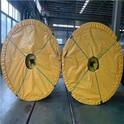
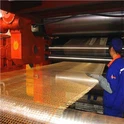
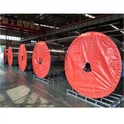
The Simandou Mountains, stretching hundreds of kilometers north to south across the Kangkang and Nzerekor regions of the Republic of Guinea, contain the world's largest and highest quality undeveloped iron ore reserves.

The Simandou project is also the largest iron ore project invested by a Chinese company overseas. Recently, with the trial production of the project, this "giant" project, which is enough to stir up the global iron ore supply pattern, will continuously supply high-grade ore to the world.
Its core competitiveness is mainly reflected in two dimensions: excellent quality and disruptive cost structure.

First, unparalleled quality advantages: The iron grade of Simandou iron ore is expected to reach up to 65%, significantly surpassing the current mainstream Australian iron ore (with grades below 61%), making it one of the few high-grade resources globally. Against the backdrop of the global steel industry transitioning towards green and low-carbon transformation, high-grade ores can substantially reduce energy consumption and carbon emissions during smelting, endowing Simandou's resources with inherent market premium potential. As analysts at S&P Global have pointed out, high-quality ores are highly aligned with steel mills' decarbonization needs, providing China with a powerful "quality bargaining chip" in negotiations.


Secondly, it is about reshaping the cost-effectiveness of the market. It is projected that after full production in 2030, the total operating costs of the Simandou project will be controlled at $55 to $60 per ton. Although this cost level exceeds the cash costs of major Australian producers, its strategic significance lies in filling the middle band of the global cost curve. According to S&P Global's forecast, the influx of Simandou may sustain iron ore prices around $87 per ton for an extended period, thereby exposing approximately 270 million tons of high-cost global production capacity to liquidation risks. This restructuring of the cost structure provides a solid economic rationale for China to adjust its procurement strategies and say "no" to high-priced ores.

In the past, China, as the largest demand side, was often a passive recipient of prices. Now, with Simandou as a strong strategic backing, China is transitioning from a "game participant" to a "rule influencer". The recent stabilization of benchmark iron ore prices at around $106 per ton reflects that under the new supply-demand landscape, the market still maintains robust demand resilience.

Based on the long-term strategic advantages catalyzed by the Simandou Project, it indicates that the future global iron ore trade will no longer be a simple buyer-seller relationship, but rather a comprehensive competition centered around resource control rights, supply chain security, and green standards. A new chapter of global iron ore trade, deeply participated in and shaped by China, is slowly unfolding.

Some pictures and content are extracted from Sina Finance and the Internet. If there is any infringement, please contact us for deletion.