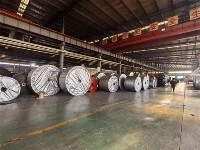
Let me break this down like I would for a new mine manager who's just realized their old belt keeps snapping mid-shift. First off, not all mining is the same, so the first thing that shapes strength needs is what exactly you're hauling. If you're in a gold or silver mine (yes, I've dealt with tons of those), the ore is hard, abrasive, and often sharp-like tiny shards of quartz that act like sandpaper against rubber. That's where the Mining steel cord conveyor belt comes in, by the way. Steel cord belts use embedded steel cables instead of the old fabric plies, and that makes all the difference for high-abrasion, high-load stuff. I once had a client in Nevada who tried a fabric belt for their gold ore site; it lasted 3 weeks before the plies tore apart. Switched to steel cord, and they haven't had a ply failure in 2 years. The cord's tensile strength is way higher than fabric, but it's also flexible enough to wrap around those big conveyor pulleys without breaking. That's a key point-strength isn't just about how much weight a belt can hold, but how it handles repeated bending, too.
Next up, load weight is a huge factor. I've seen mines hauling 10,000+ tons of ore a day, and that's not just static weight-there's the momentum when the belt's moving at 5 mph (which is fast for mining, trust me), plus the shock of dumping 2-ton rock loads onto it at the transfer points. A standard light-duty belt has a tensile strength of maybe 500 N/mm (that's newtons per millimeter, a common way to measure belt strength), but mining belts? They start at 1,000 N/mm for smaller operations, and go up to 5,000+ N/mm for the big open-pit mines moving thousands of tons hourly. If you skimp on tensile strength here, the belt stretches too much, and then the alignment goes off. Once alignment is messed up, you get spillage, which creates more work for the crew, adds wear on the belt edges, and can even cause a catastrophic tear. I remember a copper mine in Arizona that cut corners on a lower-strength belt to save a few bucks, and 2 months in, the stretched belt slipped off the pulley, tore a 50-foot section, and cost them $200k in downtime alone. Lesson learned: tensile strength is a direct link to production reliability.


Then there's the stuff people don't always think about: environmental conditions. Mining sites are in some of the harshest places on Earth-think frozen tundra in Canada, searing deserts in Australia, or humid, acid-heavy areas in tropical mines. If your belt is operating in sub-zero temperatures, regular rubber gets brittle, right? So you need belts with lower-temperature resistance materials, which still keep their tensile strength when it's -40°F. On the flip side, desert mines have ambient temps over 120°F, so rubber can soften and lose strength if it's not formulated for that. Acidic ore, like the stuff in a lot of coal mines? That eats away at the rubber compound, and if the steel cords (or fabric plies) aren't coated with acid-resistant rubber, corrosion sets in. Corroded steel cords lose their tensile strength way faster-one client in Australia had a cord belt that started corroding from acid dust, and the cords broke at the splice, which is the weakest point of any belt. We had to re-coat the splices and use a special corrosion-resistant rubber, and that fixed it. Oh, and let's not forget about impact from rock falls or heavy equipment-those impact zones need extra strength, not just in the main belt body, but in the skirt board areas where rock first hits. We add reinforced rubber pads there, which add another layer of tensile strength right where it's needed most.
Splice strength is another big one, and I see mines sleep on this all the time. The splice is where two ends of the belt are connected, and it's usually the first place a belt fails. If your belt has a tensile strength of 3,000 N/mm, your splice needs to be at least 90% of that-otherwise, it'll snap before the main belt does. A lot of mines try to cut costs on splicing, using hot splicing that's done wrong, or cold splicing compounds that don't have enough tensile strength. I had a client in a nickel mine that used a cheap cold splice, and during a night shift, the splice failed, spilling 50 tons of nickel ore all over the conveyor deck. They had to shut down for 12 hours to clean it up, and that cost them more in lost ore than they would have paid for a proper splice. We always tell clients that splice strength has to match the belt's core strength, and that regular maintenance checks (every 6 months, minimum) are non-negotiable. You can't just install a belt and forget about it-you have to inspect splices, look for frayed edges, check for stretch, especially at the splice points.


Wait, let's talk about belt longevity too, because that's tied directly to strength. A belt with high tensile strength but poor abrasion resistance will wear out fast, even if it can hold a lot of weight. I always tell clients it's a balance between strength and durability. For example, a coal mine has softer ore than a gold mine, so they can use a belt with slightly lower tensile strength but better abrasion resistance to extend its life. But if a coal mine is in an area with lots of rock impact, they need that extra tensile strength to handle the shocks. It's not a one-size-fits-all, like I said earlier. We work with each mine to do a site assessment-we look at what they're hauling, the load weight, environmental temps, conveyor length, even the speed of the belt-to spec out exactly the right strength. No more guessing, no more cutting corners, no more belt failures.
I've been in this game for long enough that I've seen it all-belts that tear so bad they have to be pulled out in pieces, splices that snap mid-shift, belts that stretch so much the entire conveyor system goes out of alignment. That's why I can't stress enough how important it is to get the strength requirements right from the start. If you're in mining, downtime is money lost-serious money. A single day of shutdown can cost some mines hundreds of thousands, even millions of dollars. So investing in a belt with the correct strength, not just a cheap one, is a no-brainer.
If you're a mine manager, maintenance supervisor, or anyone in the mining space who's dealing with conveyor belt issues-whether you're looking to upgrade your current system, replace a failed belt, or just want to make sure you're not overspending on strength you don't need-hit me up. I can walk you through the process, answer all your questions, and help you get the right belt for your operation. No sales pitch, no jargon, just straight talk about what works.

And one last thing: don't wait until your next belt failure to figure this out. Be proactive. The best way to avoid downtime is to get it right before something goes wrong. So reach out whenever you're ready-we can work through all the specs together.
References:
- Mine Safety and Health Administration (MSHA). Conveyor Belt Safety Standards for Metal and Non-Metal Mines. U.S. Department of Labor, 2022.
- Society for Mining, Metallurgy & Exploration (SME). Conveyor Belt Design and Application Guide. SME, 2021.
- Rubber and Plastic News. "High-Strength Conveyor Belts for Harsh Mining Environments." August 2023.
- International Organization for Standardization (ISO). ISO 14890:2019 – Conveyor Belts for Bulk Materials – Tensile Strength Requirements and Testing. ISO, 2019.
- Australian Institute of Mining and Metallurgy (AusIMM). Maintenance Practices for Conveyor Systems in Underground and Open-Pit Mines. AusIMM, 2022.